
School Meetings
School Meetings are guest seminars delivered by invited scholars and experts, presenting and discussing cutting-edge research in Psychological Sciences.
These seminars are open to all PhD students and to anyone interested in the topics covered, offering an opportunity to engage with new perspectives, current findings, and methodological advances in the field.
They represent a key moment for scientific exchange and community engagement within the PhD Programme.
🕐 1 pm (generally on Thursdays; precise dates are listed below)
📍 Lecture Hall (“Psico 5” building) – ESU Student House, Via Venezia, 20
UPCOMING EVENTS
no currently scheduled future events
PAST EVENTS ↓
How do people decide whether a sentence “sounds right” in their native language by judging its syntactic well-formedness independently of meaning? Sentence acceptability judgments reflect not only the speaker’s grammatical knowledge but also performance factors including information packaging and processing ease. In this talk, I review what we know about the interaction of these factors,[…]

How do people decide whether a sentence “sounds right” in their native language by judging its syntactic well-formedness independently of meaning? Sentence acceptability judgments reflect not only the speaker’s grammatical knowledge but also performance factors including information packaging and processing ease. In this talk, I review what we know about the interaction of these factors,[…]

How do people decide whether a sentence “sounds right” in their native language by judging its syntactic well-formedness independently of meaning? Sentence acceptability judgments reflect not only the speaker’s grammatical knowledge but also performance factors including information packaging and processing ease. In this talk, I review what we know about the interaction of these factors,[…]
How do people decide whether a sentence “sounds right” in their native language by judging its syntactic well-formedness independently of meaning? Sentence acceptability judgments reflect not only the speaker’s grammatical knowledge but also performance factors including information packaging and processing ease. In this talk, I review what we know about the interaction of these factors,[…]

How do people decide whether a sentence “sounds right” in their native language by judging its syntactic well-formedness independently of meaning? Sentence acceptability judgments reflect not only the speaker’s grammatical knowledge but also performance factors including information packaging and processing ease. In this talk, I review what we know about the interaction of these factors,[…]

How do people decide whether a sentence “sounds right” in their native language by judging its syntactic well-formedness independently of meaning? Sentence acceptability judgments reflect not only the speaker’s grammatical knowledge but also performance factors including information packaging and processing ease. In this talk, I review what we know about the interaction of these factors,[…]

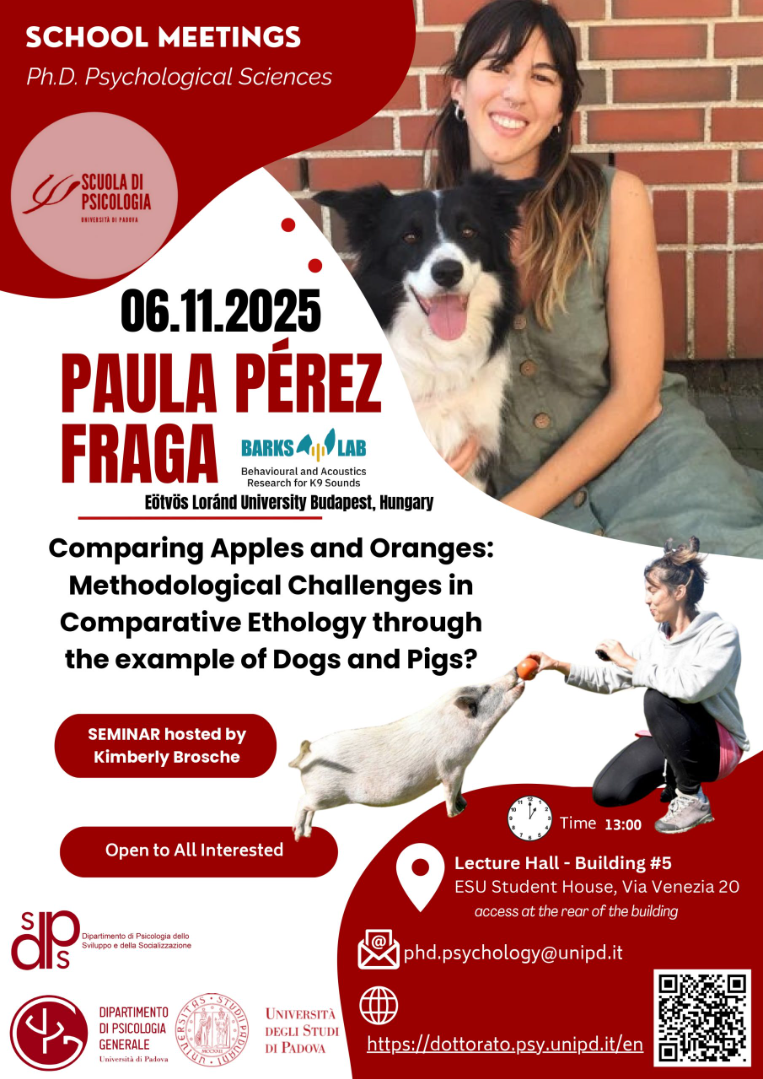
Various animal species can engage in socio-communicative interactions with humans, yet the factors that promote such behaviours remain under debate. Domestication, socialization, and species-specific predispositions may all play a role. To better understand how human–animal communication is shaped, it is essential to compare different species kept in similar conditions However, adopting a comparative approach when[…]
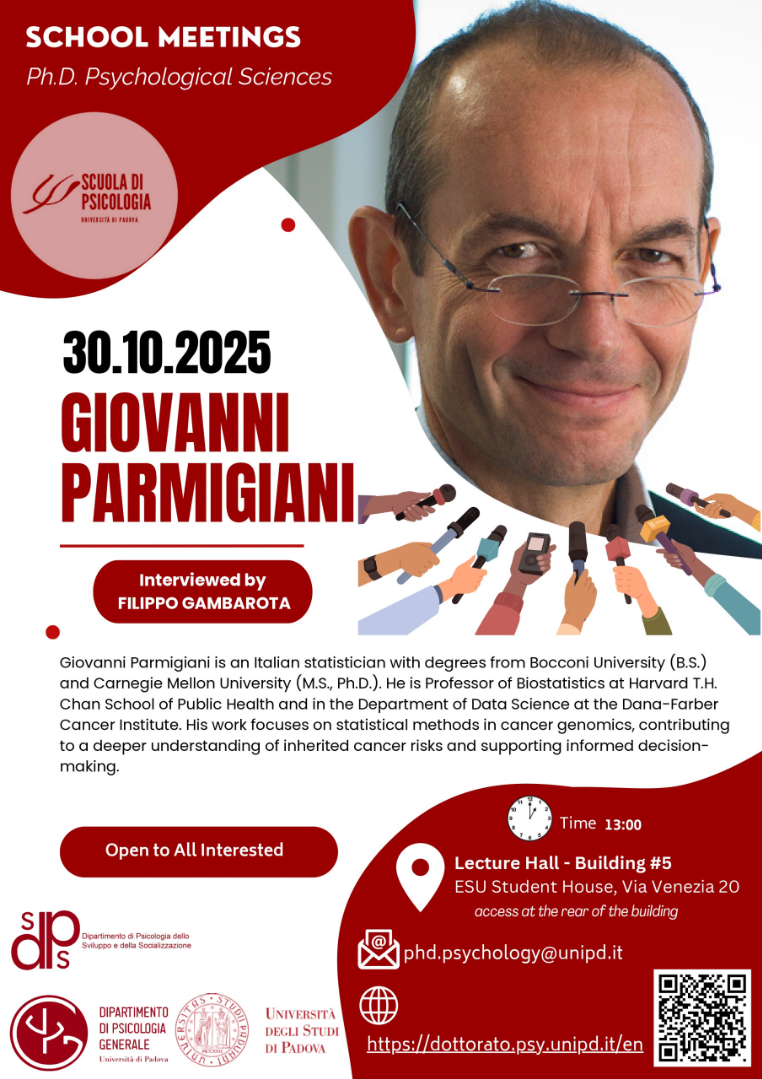
Giovanni Parmigiani is an Italian statistician with degrees from Bocconi University (B.S.) and Carnegie Mellon University (M.S., Ph.D.). He is Professor of Biostatistics at Harvard T.H. Chan School of Public Health and in the Department of Data Science at the Dana-Farber Cancer Institute. His work focuses on statistical methods in cancer genomics, contributing to a[…]
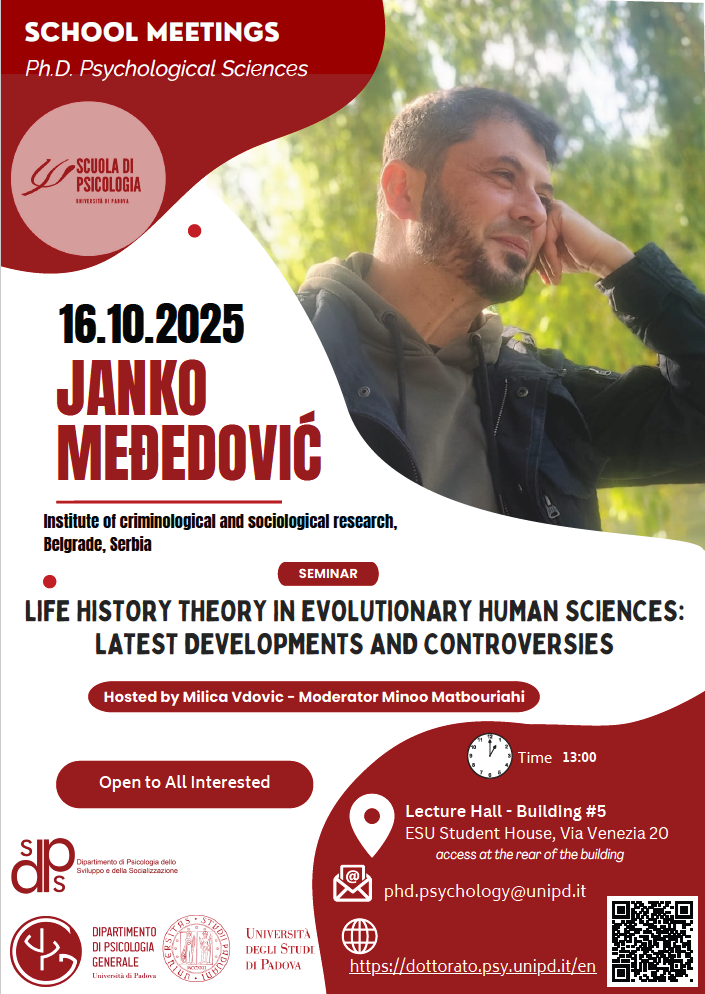
Life history theory represents one of the most important conceptual frameworks in evolutionary biology, and its role is potentially even more prominent in the evolutionary social sciences. This theory attempts to explain the differences between and within species in fertility, longevity and parental investment via the characteristics of the individuals (somatic, physiological, and behavioral) and[…]
Recently, theories of consciousness have proliferated, partly because traditional empirical approaches focusing on neural correlates of consciousness (NCC) offer limited constraints. Unlike most traditional studies, which use binary paradigms (e.g., “seen” vs. “unseen”), a structural approach aims to characterize qualia and their physical substrates through relationships among qualia and between qualia and neural mechanisms. We[…]