
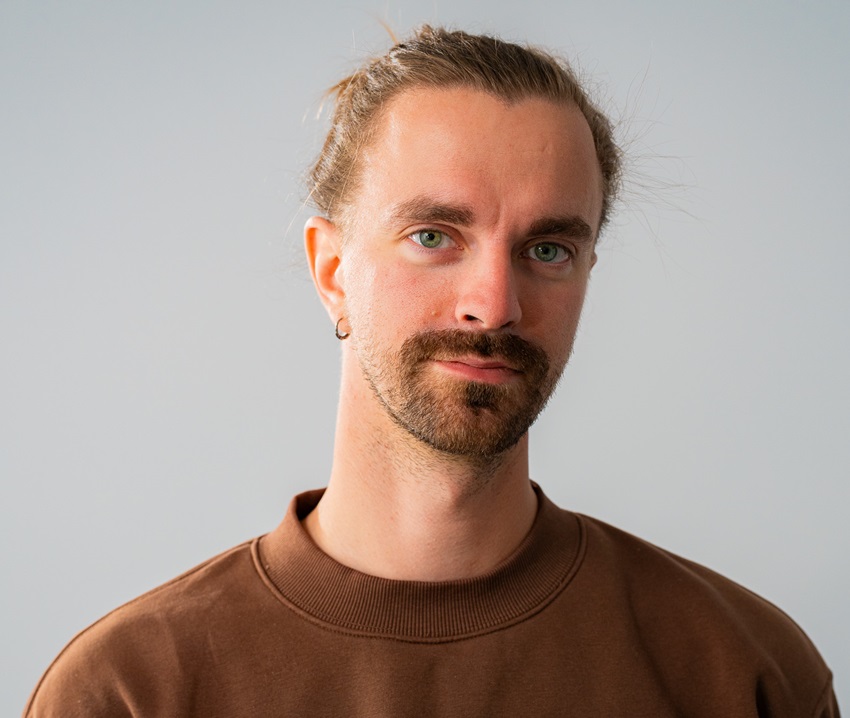
Evgenii Pashnin
- Group:cycle-39
Evgenii Pashnin
I’m a psychiatrist and CBT-psychotherapist with a background that connects clinical neuroscience, psychophysiology, and behavioral science. Early in my career, I worked with people living with epilepsy and functional (non-epileptic) seizures. That experience sparked a lasting curiosity about how our body and mind communicate — how physical sensations, emotions, and beliefs shape one another, especially in moments of stress or loss of control.
Around the same time, I became a freediving instructor, which changed how I thought about breathing, awareness, and endurance. Watching how freedivers can stay calm, relaxed, and focused while holding their breath under pressure made me realize that breath control is not just a physiological act — it’s a powerful window into how we handle discomfort, anxiety, and limits. That realization gradually turned into the main thread of my current research.
In my doctoral project, I study breath-holding (BH) as both a scientific tool and a potential way to train resilience. I’m interested in how voluntary apnea can reveal differences in distress tolerance, CO₂ sensitivity, and interoceptive awareness — and how these can change through practice. My work also looks at why BH is studied so inconsistently across disciplines and how it can be made more reliable and informative. In the lab, I combine physiological recordings with behavioral and self-report data to explore how the body and mind interact as breath-holding becomes longer or more challenging.
Beyond research, I still teach and practice freediving — it keeps me grounded, curious, and constantly aware that what I study in the lab has its roots in something very human: the simple, sometimes uneasy act of holding one’s breath.
Supervisor: Prof. Simone Cutini
Co-supervisor: Prof. Jeff Kiesner