School Meetings
School Meetings are guest seminars delivered by invited scholars and experts, presenting and discussing cutting-edge research in Psychological Sciences.
These seminars are open to all PhD students and to anyone interested in the topics covered, offering an opportunity to engage with new perspectives, current findings, and methodological advances in the field.
They represent a key moment for scientific exchange and community engagement within the PhD Programme.
🕐 1 pm (generally on Thursdays; precise dates are listed below)
📍 Lecture Hall (“Psico 5” building) – ESU Student House, Via Venezia, 20
UPCOMING EVENTS
PAST EVENTS ↓
Padova, Italy
Dualism has a terrible reputation in cognitive science, and for good reason: the tacit belief that the mind is distinct from the body wreaks havoc on reasoning and distorts our understanding of who we are. The “innateness wars” and the “hard problem of consciousness” could well be among its casualties. Notwithstanding its many tolls, however,[…]

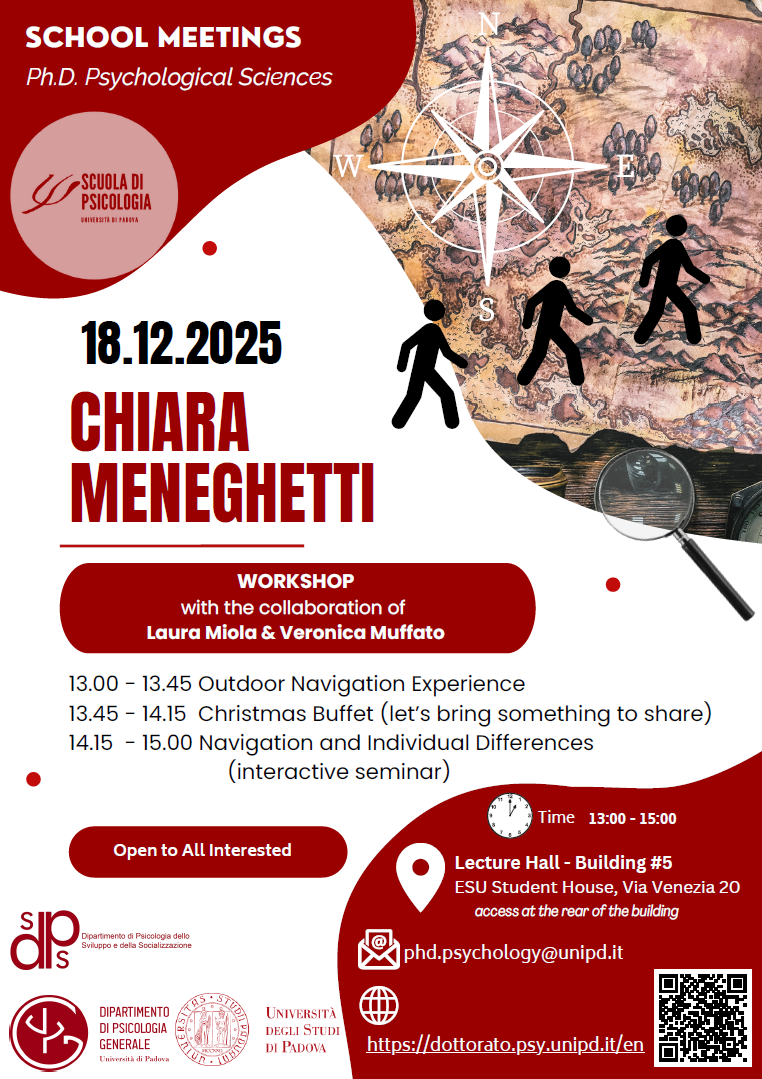
Chiara Meneghetti gives a workshop on navigation experience, with the collaboration of Laura Miola and Veronica Muffato. 13.00 – 13.45 Outdoor Navigation Experience 13.45 – 14.15 Christmas Buffet (let’s bring something to share) 14.15 – 15.00 Navigation and Individual Differences (interactive seminar)
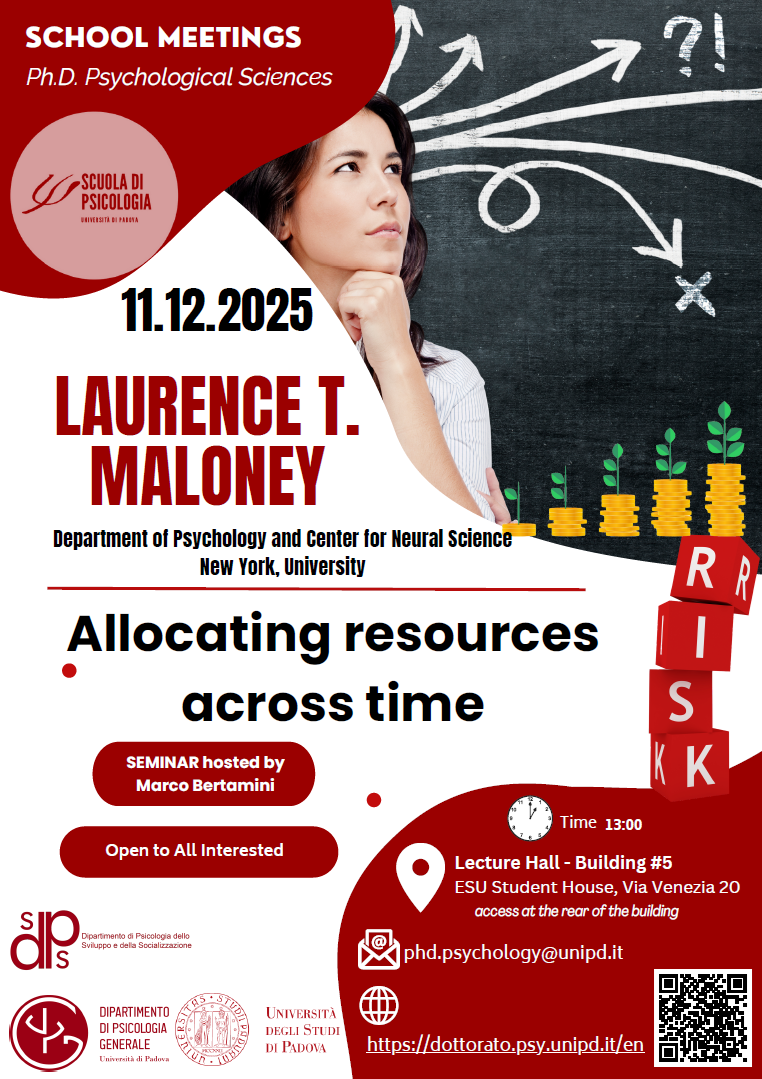
While there is an extensive literature concerning human decision under risk, most experiments focus on a single decision at a single point in time employing isolated trials presented in randomized order. The outcome of any one decision does not limit or increase the range of actions available on later trials. Any sequential effects found are[…]
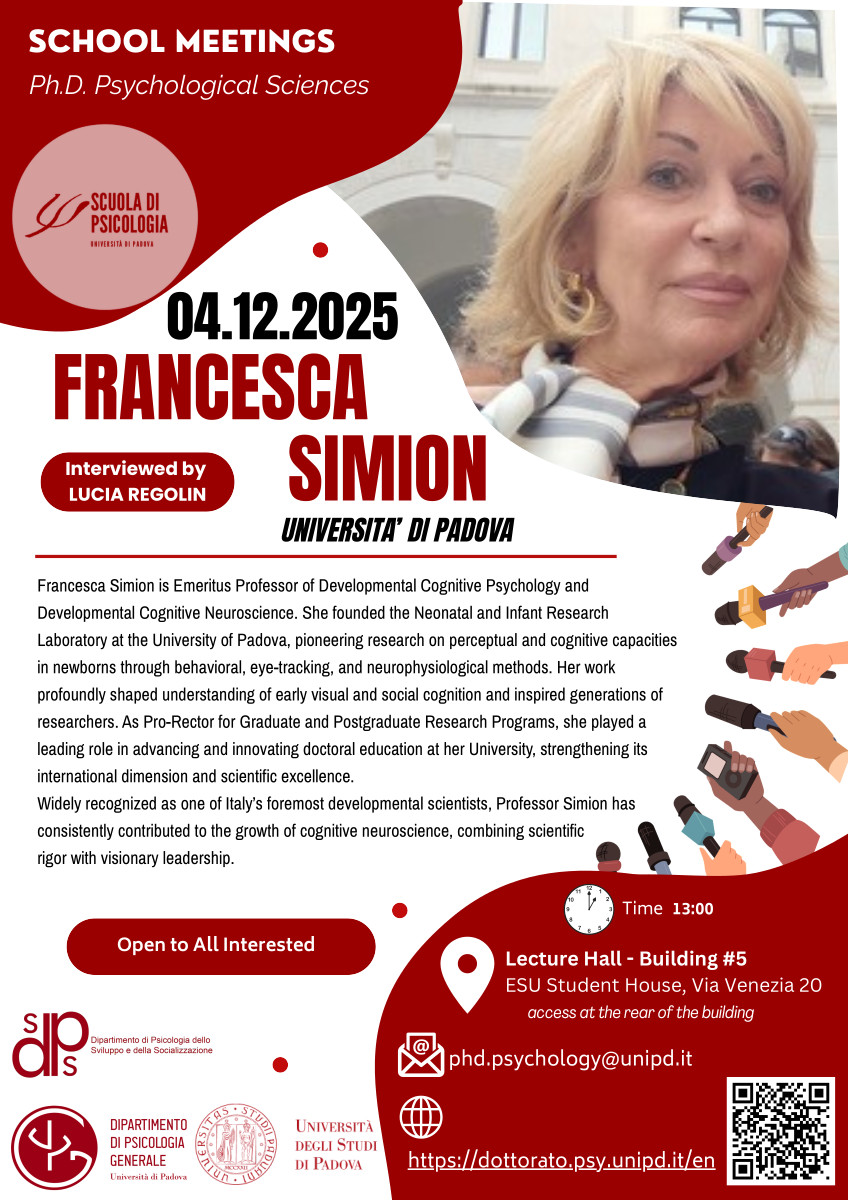
Francesca Simion is Emeritus Professor of Developmental Cognitive Psychology and Developmental Cognitive Neuroscience. She founded the Neonatal and Infant Research Laboratory at the University of Padova, pioneering research on perceptual and cognitive capacities in newborns through behavioral, eye-tracking, and neurophysiological methods. Her work profoundly shaped understanding of early visual and social cognition and inspired generations[…]
Researchers are ideally interested in making claims about all human beings: research would be much less interesting if it only applied to the participants who joined a study. Generalisation in research is based on a set of (delicate) statistical assumptions. This session will introduce to the most important notions of selection or missingness mechanism in[…]

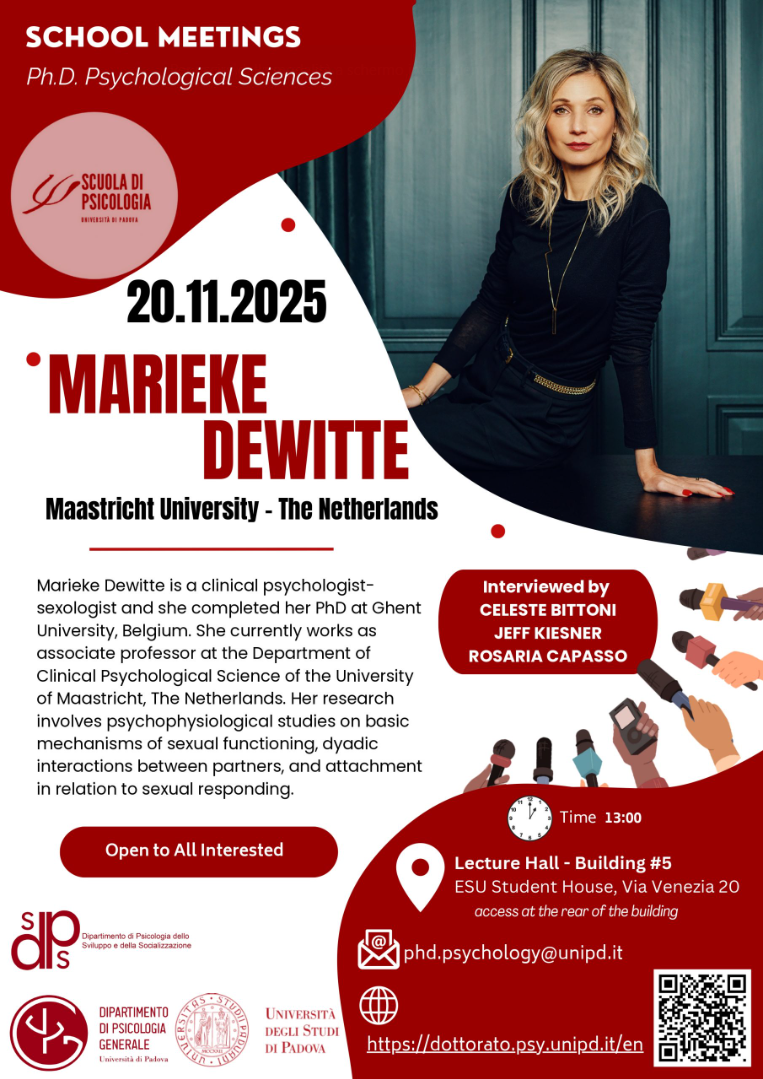
Marieke Dewitte is a clinical psychologist-sexologist and she completed her PhD at Ghent University, Belgium. She currently works as associate professor at the Department of Clinical Psychological Science of the University of Maastricht, The Netherlands. Her research involves psychophysiological studies on basic mechanisms of sexual functioning, dyadic interactions between partners, and attachment in relation to[…]
How do people decide whether a sentence “sounds right” in their native language by judging its syntactic well-formedness independently of meaning? Sentence acceptability judgments reflect not only the speaker’s grammatical knowledge but also performance factors including information packaging and processing ease. In this talk, I review what we know about the interaction of these factors,[…]

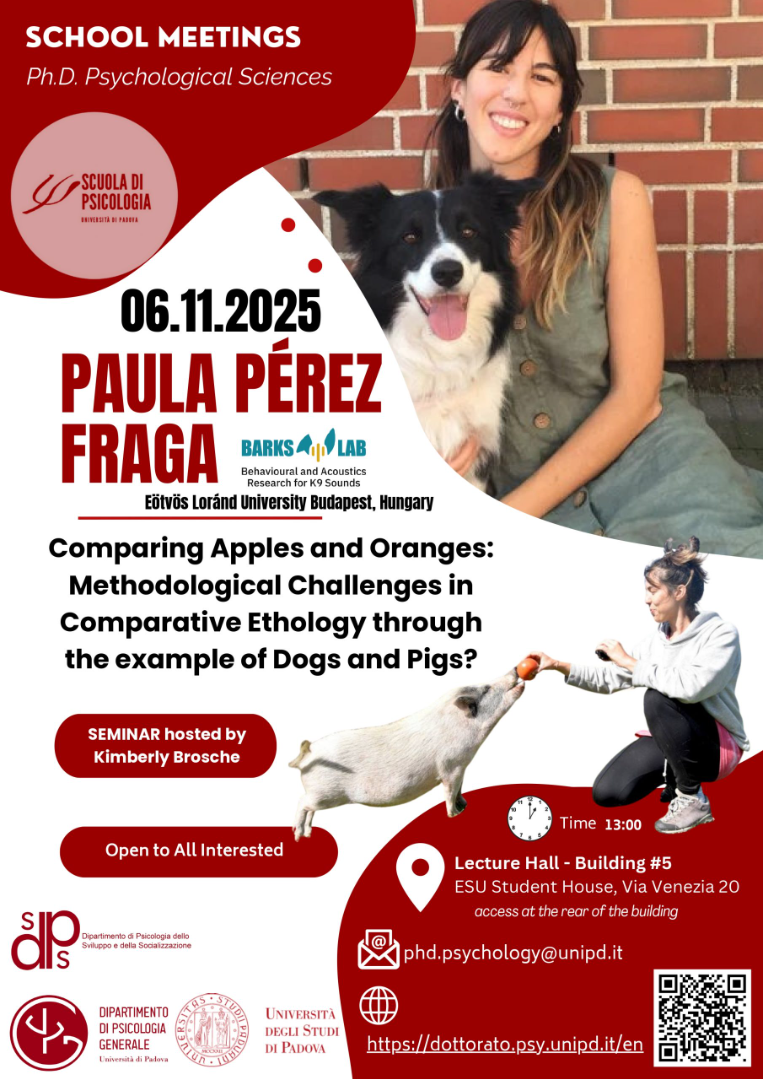
Various animal species can engage in socio-communicative interactions with humans, yet the factors that promote such behaviours remain under debate. Domestication, socialization, and species-specific predispositions may all play a role. To better understand how human–animal communication is shaped, it is essential to compare different species kept in similar conditions However, adopting a comparative approach when[…]
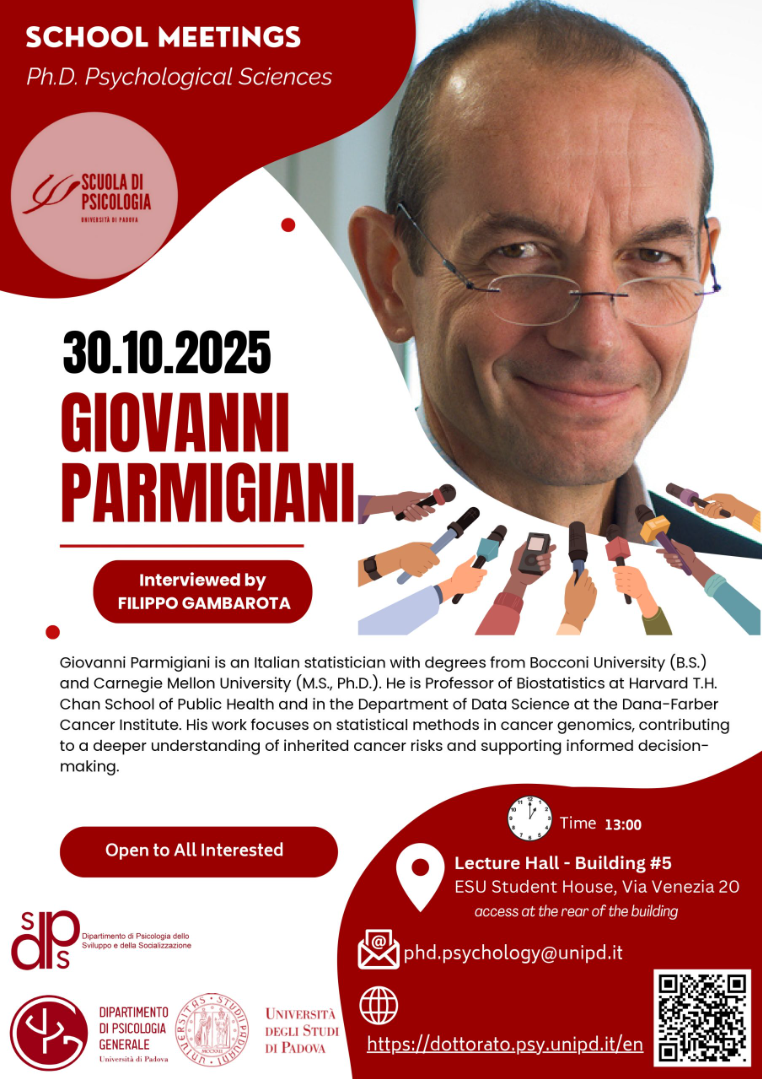
Giovanni Parmigiani is an Italian statistician with degrees from Bocconi University (B.S.) and Carnegie Mellon University (M.S., Ph.D.). He is Professor of Biostatistics at Harvard T.H. Chan School of Public Health and in the Department of Data Science at the Dana-Farber Cancer Institute. His work focuses on statistical methods in cancer genomics, contributing to a[…]
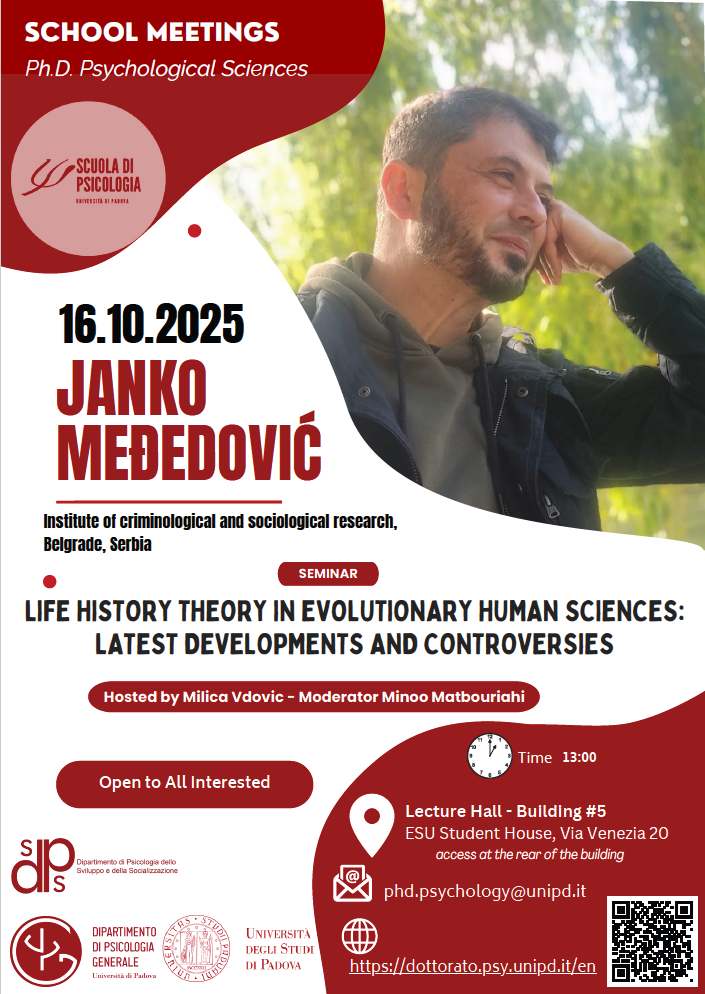
Life history theory represents one of the most important conceptual frameworks in evolutionary biology, and its role is potentially even more prominent in the evolutionary social sciences. This theory attempts to explain the differences between and within species in fertility, longevity and parental investment via the characteristics of the individuals (somatic, physiological, and behavioral) and[…]